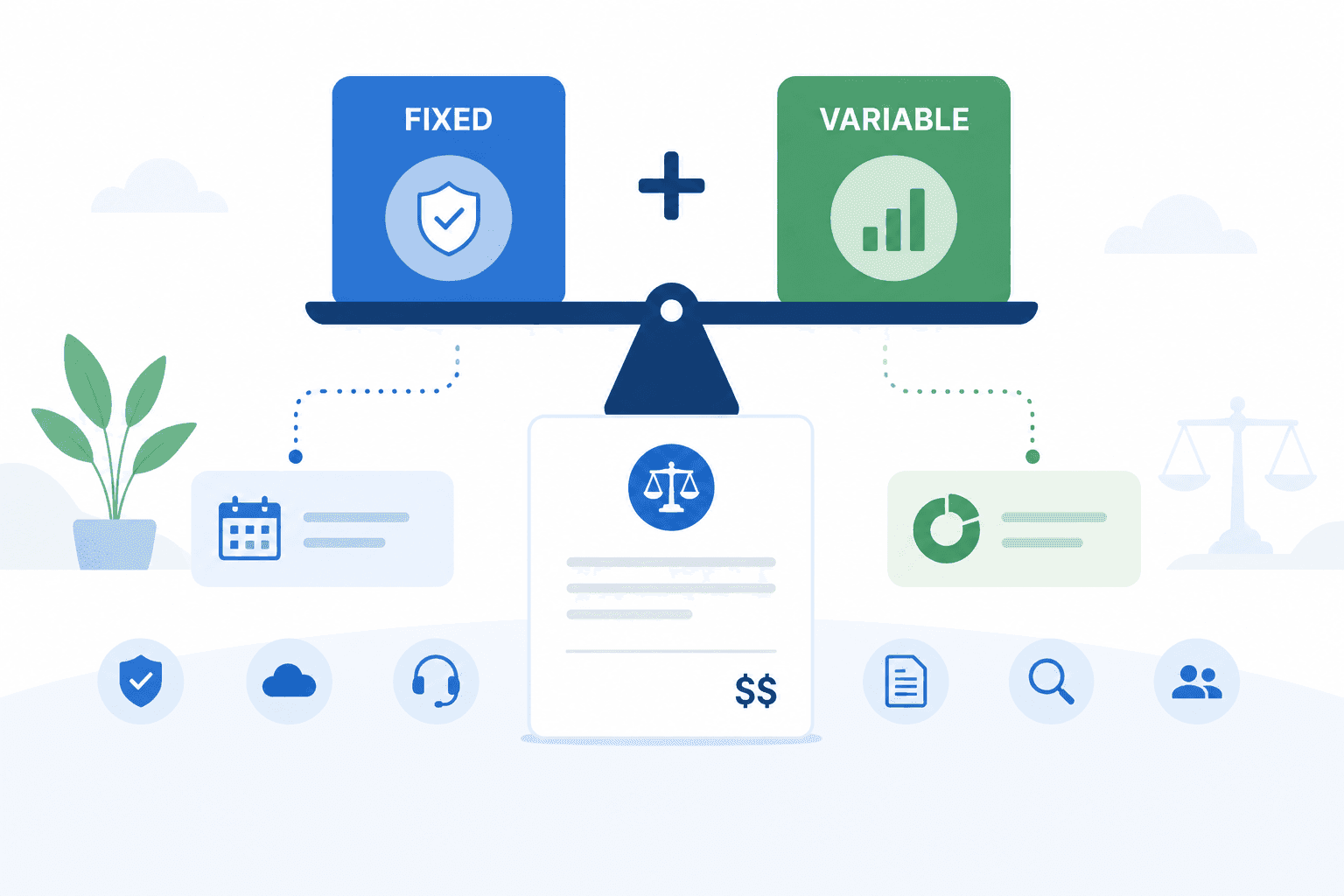
Pure per-seat pricing breaks when one user can drive 100 times the cost of goods of another. The vendor priced flat per seat absorbs the difference in margin while the heavy user gets a structural subsidy from the light user.
In this article, we examine why per-seat breaks in the AI era, why the hybrid model works for vendors (and why this fails when designed badly), the most effective design principles, the committed-spend bridge, and the operational requirements to run hybrid pricing well.